"Hereafter you shall be ordained and go forth and deliver my words unto the children of men...if they will not believe my words, they would not believe you, my servant Joseph, if it were possible that you should show them all these things which I have committed unto you"
I keep returning to a simple revelatory principle of intermediaries hoping to finally be satisfied with an articulation of a truth that seems to elude my expression. God uses intermediaries to speak to us--language mediates His messages, prophets mediate the linguistic expression. It's a faith-promoting mercy-filled practice that grants us fellow relatable humans from which to hear His voice and thereby both gives us His voice and renders us less culpable for rejecting it because we're skeptical not of Him but of His intermediary. But it has a corollary: Trust in Him now also has to mean trust in their words. Not in their persons, but in the fidelity of the speech of a fellow fallible human to the content of a divine message.
And that's a hard thing. We want to believe in ourselves as modern rational humans who can tell true from false, illusion from reality. But there are a lot of ways we aren't actually as rational as we imagine ourselves to be. A lot of our reasons, at bottom, are emotional, subconscious, based on false perceptions, gaps filled in by processing patterns in our brains as they interpret imperfect or incomplete neural signals because we might need fight or flight instincts to kick in before slower cognitive processes can, etc.
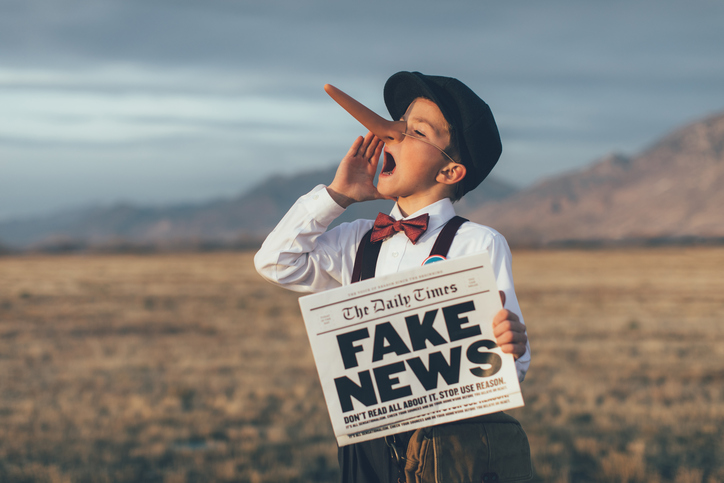
Worse, we're prideful by nature. We're resistant to truth just because it comes from a source we don't want to respect. We call "fake news" on stuff we don't know the facts about just because it matches the narrative of our political opponent, for example. We want judging authority, and guard it jealously. But we're biased and we know it even if we won't admit it to ourselves. So when we combine God's methodology of working through proxies with our natural tendency to want to decide for ourselves what's correct and incorrect, we're left with a logical quandary of epistemology: there is only a binary choice, but since we don't know the message's provenance beforehand, we can't evaluate the proposition for its truth value before trusting the messenger who might be false. We have to take a leap of faith and risk being wrong in order to be right and sure of it. Said another way: correct interpretation of truth is a function of attitude. In yet another way of framing it, skeptics produce their own self-fulfilling prophecies--when they refuse to believe until the evidence overwhelms them, they cut themselves off from the evidence before it can penetrate their reason. The obverse of the skeptic's dilemma is the credulous dilemma in which believing everything before evidence opens them up to risking belief in false prophets, not just true ones. The logical problem that ties both of these extremes together is moral relativism--the rampant scourge of our modern condition. Both the skeptic and the naively credulous choose to relieve themselves of the duty of moral judgment, and act merely on their own prejudice for or against claims of authority without regard for the content of the claims or messages. Being agnostic to substance, they mistake avoidance of judgment for wisdom and moral superiority.
And yet, skepticism that is not blind, is actually humility and curiosity combined with reason. We are commanded to try the spirits and to know false prophets by their fruits. We do need to be careful so as not to fall into delusion, or accept false authority. We are responsible for our actions, and basing actions on false beliefs produces immorality, suffering, and decreasing ability to discern truth.
So the binary of a message either being authentically from God or not, and the binary of credulity sets up interpretive barriers according to attitude along a grid:
1. You're a skeptic and it's a false prophet = bravo, you've successfully avoided the message beforehand and saved yourself from delusion because you let no claim of authority penetrate.
2. You're credulous and it's a false prophet = yikes, you've tragically failed to engage your faculties of reason on the message and you just drank toxic kool-aid because you let a fatal claim of authority penetrate.
3. You're a skeptic and it's a true prophet = yikes, you've tragically failed to engage the important message and you missed your eternal salvation because you let no claim of authority penetrate.
4. You're credulous and it's a true prophet = bravo, you've successfully allowed the important message to penetrate and your eternal salvation is assured because you let a critical claim of authority penetrate.
I suppose that this grid appears somewhat like Pascal's wager, in which just for making the agnostic bet that if God exists you get rewards, but if the bet turns out false, you lose nothing. From the believer's perspective, there's still the risk that a message won't be from God as claimed, but if we adopt the skeptic's attitude, we miss 100% of the shots we don't take.
But the grid itself is flawed. It's a caricature designed to maximize the rhetorical essence of the different positions, but one of the binaries isn't binary: it's a spectrum. Attitude is a vector with both magnitude and direction. God's saving principles aren't arbitrary or mindless. You don't get the winning ticket to heaven by failing to think but picking the right lucky belief numbers. Lines 1-3 on the above grid are more or less accurate, but line 4 flattens not only believers into a caricature, but also God. This is the essential mistake the skeptics make when they criticize believers as blind.
Since credulity is a circular spectrum of openness to messages, the extremes of closed-mindedness arrive at the same conclusion--both the skeptics and the credulous remain ignorant. However, somewhere in the middle, an attitude which accepts the claims with enough curiosity about their goodness to test them stands a chance of rationally allowing truth to penetrate and advance knowledge. The scientific method--systematic, empirical rationality that nevertheless accepts as truth only what experimentation can't disprove--and faith, which systematically hopes that something that might be true is worth experimenting upon to confirm the hope, are essentially the same point on the spectrum of credulity, oriented in opposite directions. In other words we have a moral duty to evaluate truth claims for their content, not just assume their truth by their provenance. God wants us to think for ourselves, and not just accept His will because someone else told us so, but because we are humble enough to align our reason with His superior reason--to learn from Him. His communications have the design of promoting our growth, and so the credulous doing the right things still isn't succeeding because they are perpetual parrots rather than agents growing in truth and righteousness. God doesn't want His children simply to do good, He wants them to choose good.
Evidence doesn't convince, attitude enables persuasion. Rejection of God will invariably also mean rejection of His chosen intermediaries. But acceptance of His intermediaries still requires courage, an orientation to growth, willingness to obey as a test to confirm the provenance of the Providence. And it requires increasing fidelity as increasing confirmations demonstrate the truth of all of God's true messages. Greater light requires greater commitment. This is the principle: grow toward God. Fill your life with confirmed truth, not your own assumptions. Knowledge is power. In fact, eternal life is knowing God through His Son. And our reception of that knowledge depends, almost entirely--because of their respect for our moral agency--on our attitude.




No comments:
Post a Comment